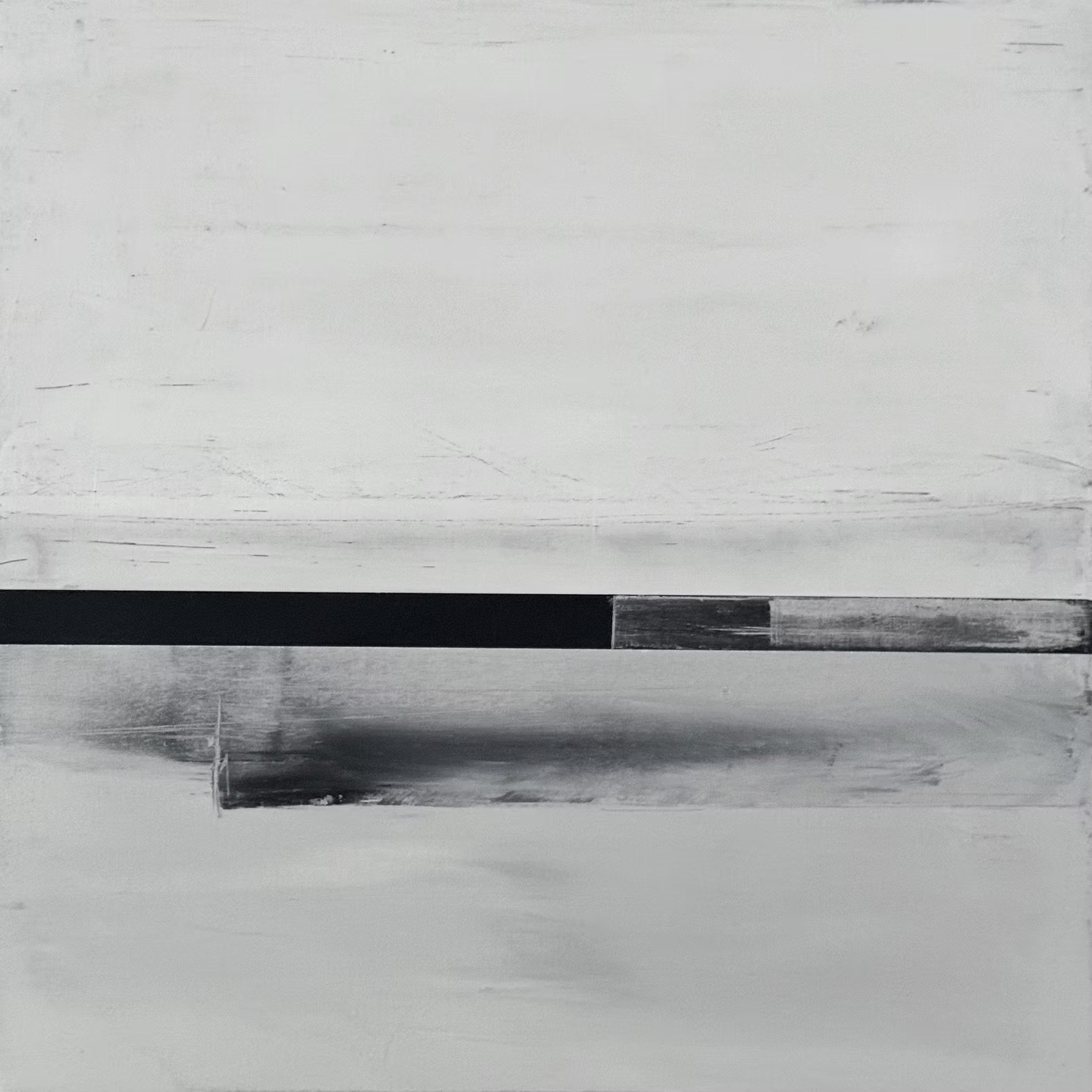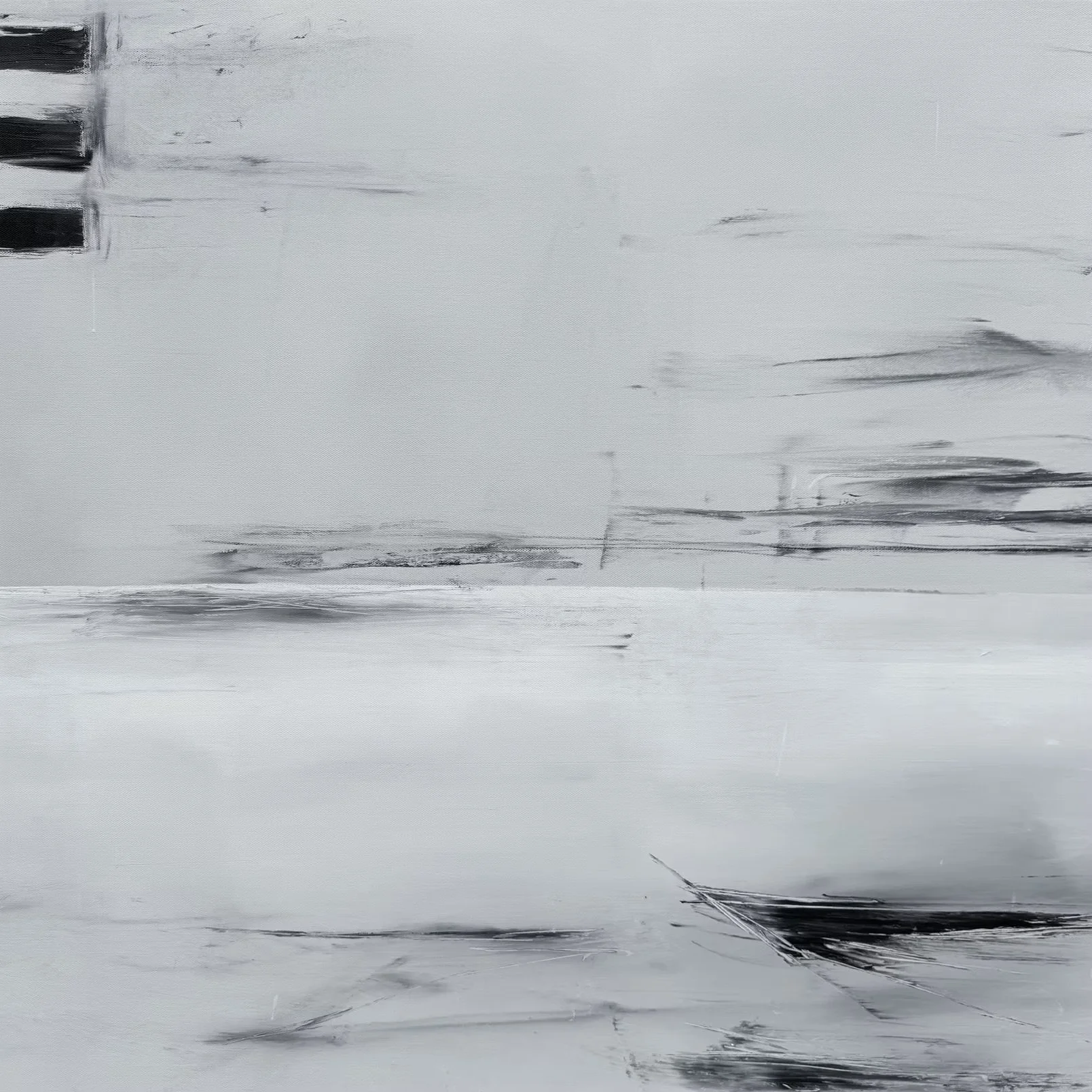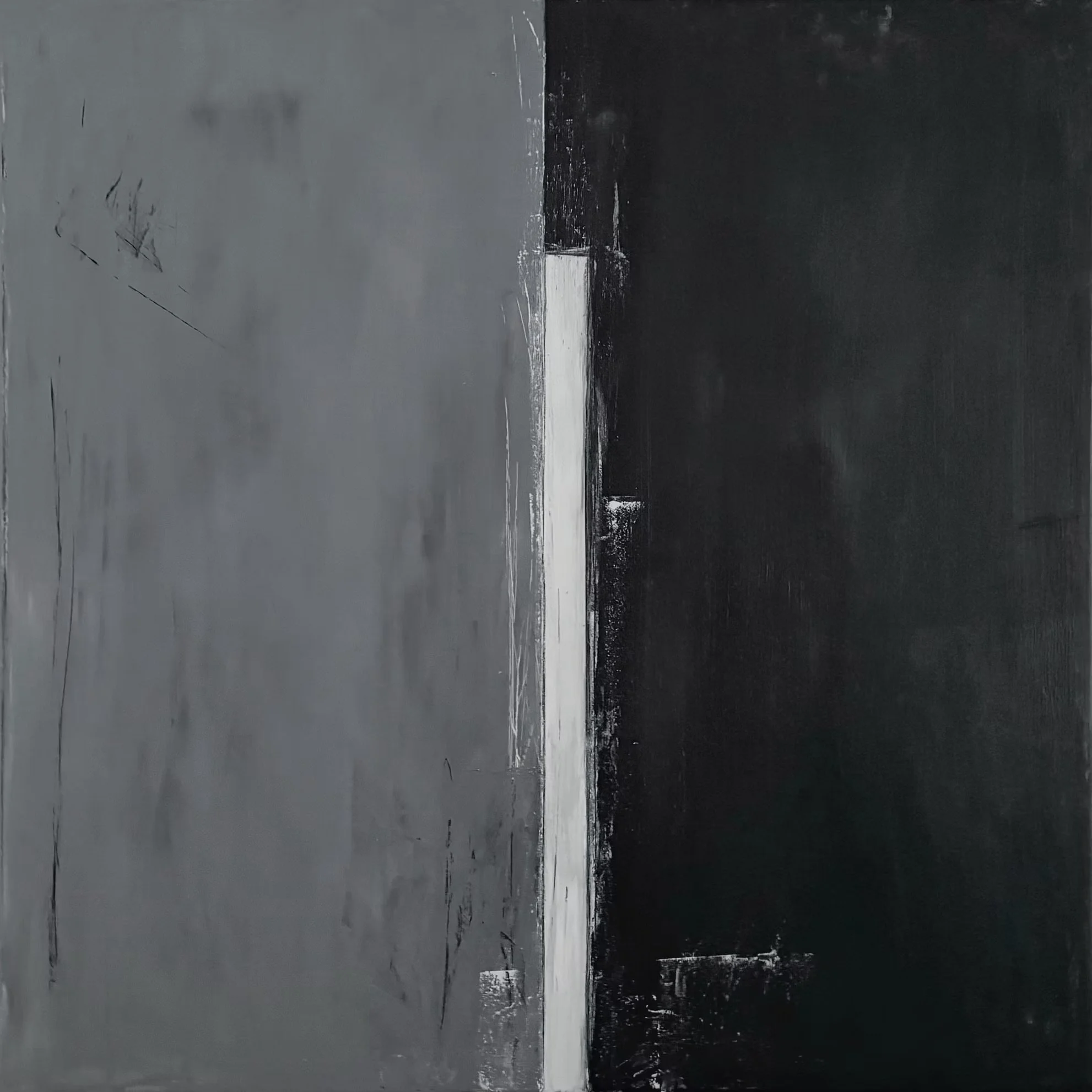
LS No. 286

$3,000.00

Brandon McKenzie
LS No. 286, 2025
Acrylic and graphite on canvas
30 × 30 in
Contemporary abstract painting

The Artwork

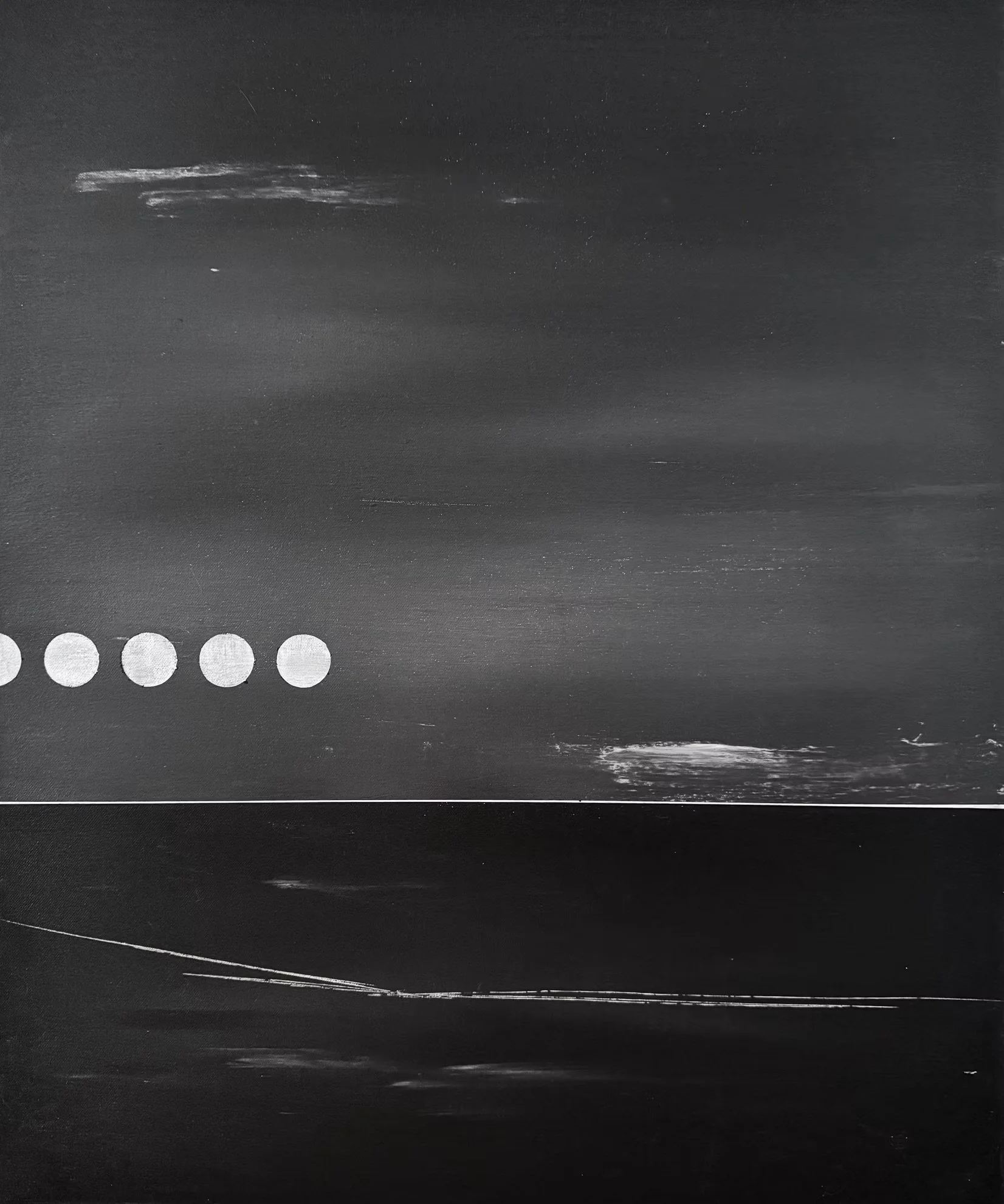
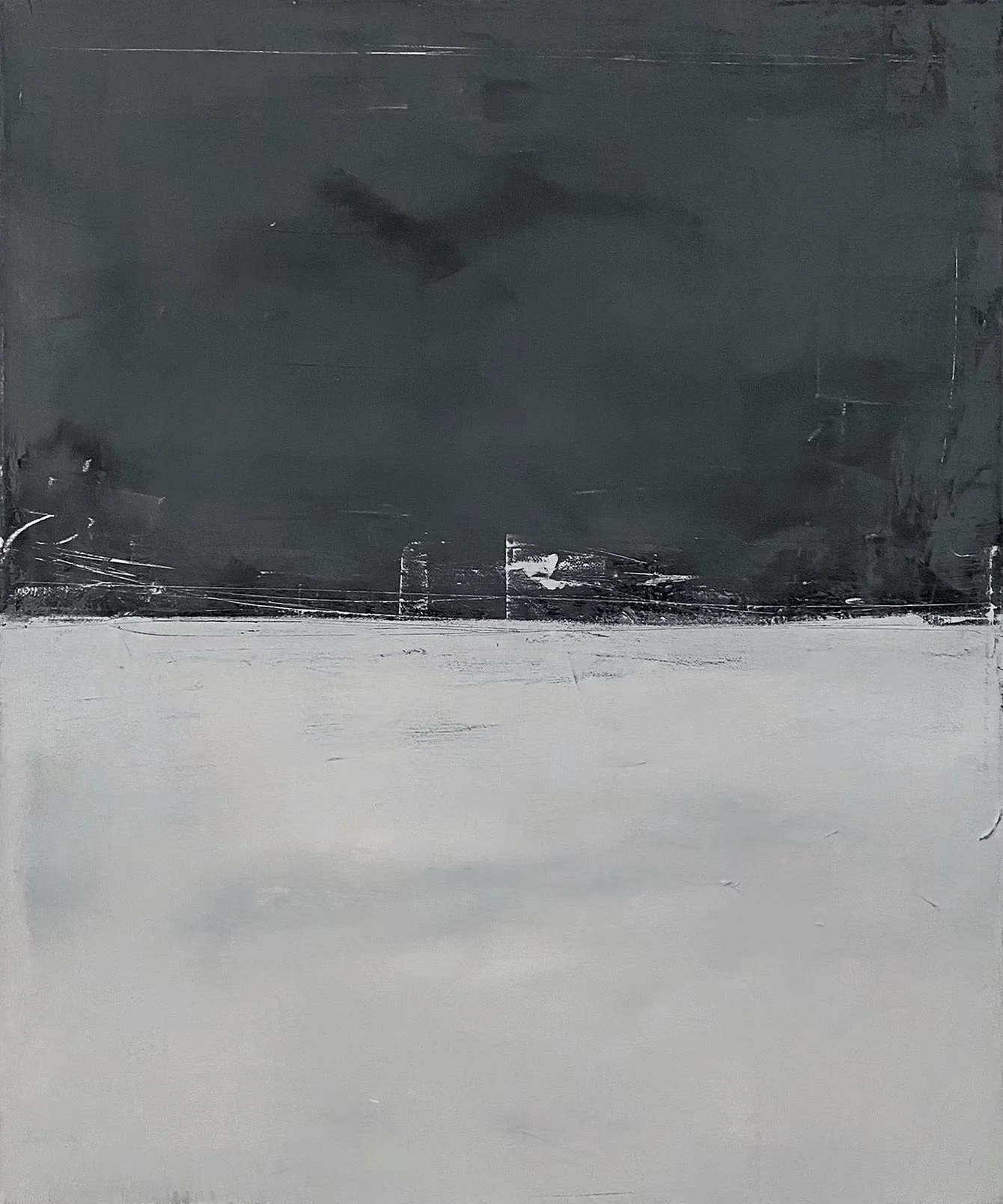
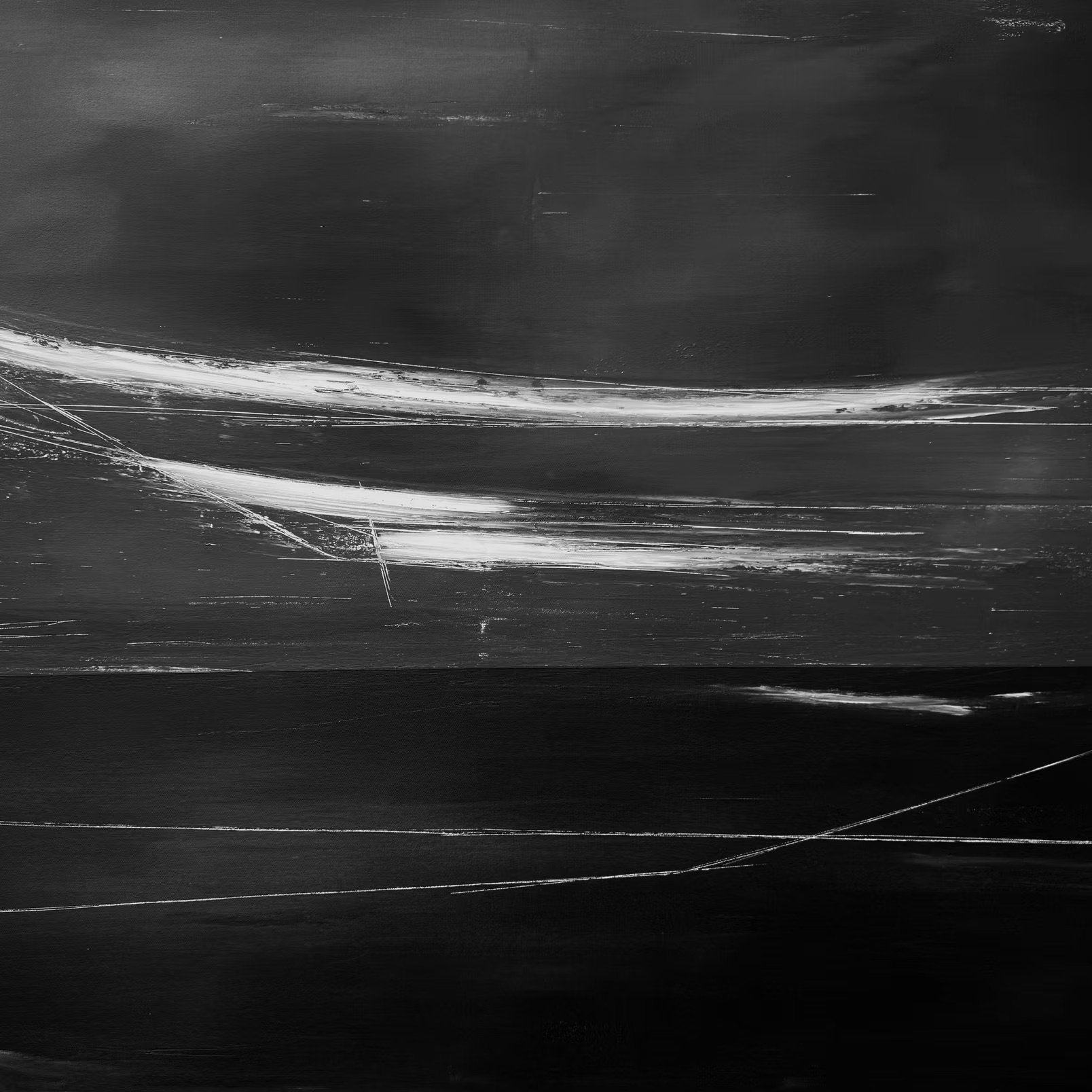
LS No. 286 works through a concentrated range of charcoal, black, and graphite grey. The upper two-thirds of the canvas is held in a deep dark-grey field animated by lighter marks that travel laterally across the surface. Below, a black lower zone anchors the painting, crossed by two thin horizontal lines that introduce a precise but understated framework.

The painting’s directional marks suggest movement across an expanse—perhaps the distant geometry of a landscape reduced to its most essential elements, or the residual path of the artist’s hand as it tests, revises, and rebalances the composition. The thin intersecting lines lend the work an architectural clarity, while the layered graphite passages keep that structure from becoming static.

McKenzie’s process is central to the visual experience of LS No. 286. Its dark surface carries an accumulated history of additions and removals, allowing light grey and blue-inflected graphite to emerge as quiet disruptions within the field. The result is a moody, spatial abstraction in which darkness becomes a place for texture, depth, and discovery.

Specifications & Details

  • Artist: Brandon McKenzie

  • Title: LS No. 286

  • Year: 2025

  • Medium: Acrylic and graphite on canvas

  • Dimensions: 30 × 30 in

  • Style: Contemporary abstract painting

  • Frame: Handmade by the artist; included

Brandon McKenzie
LS No. 286, 2025
Acrylic and graphite on canvas
30 × 30 in
Contemporary abstract painting

The Artwork

LS No. 286 works through a concentrated range of charcoal, black, and graphite grey. The upper two-thirds of the canvas is held in a deep dark-grey field animated by lighter marks that travel laterally across the surface. Below, a black lower zone anchors the painting, crossed by two thin horizontal lines that introduce a precise but understated framework.

The painting’s directional marks suggest movement across an expanse—perhaps the distant geometry of a landscape reduced to its most essential elements, or the residual path of the artist’s hand as it tests, revises, and rebalances the composition. The thin intersecting lines lend the work an architectural clarity, while the layered graphite passages keep that structure from becoming static.

McKenzie’s process is central to the visual experience of LS No. 286. Its dark surface carries an accumulated history of additions and removals, allowing light grey and blue-inflected graphite to emerge as quiet disruptions within the field. The result is a moody, spatial abstraction in which darkness becomes a place for texture, depth, and discovery.

Specifications & Details

  • Artist: Brandon McKenzie

  • Title: LS No. 286

  • Year: 2025

  • Medium: Acrylic and graphite on canvas

  • Dimensions: 30 × 30 in

  • Style: Contemporary abstract painting

  • Frame: Handmade by the artist; included

Biography

Brandon McKenzie is a contemporary abstract painter who creates paintings that investigate rhythm, process, and restraint through pared-down compositions and a largely grayscale palette accented by graphite. Each work develops over time through repeated reworking, with every layer responding to the traces beneath it and reinforcing his belief that process is primary and product is secondary. Rooted in early studies of the geometric farmlands of western Kansas, McKenzie’s current series distills those landscapes into more open, spatial arrangements while preserving the tension between structure, gesture, addition, and erasure. By limiting color and emphasizing light, space, and layered surfaces, his paintings create a quiet balance between disorder and arrangement.


“My paintings evolve through a rhythm of layering and reduction, with each mark shaped by what came before it. The process leads the work forward through repetition, movement, and reaction, while my current series translates the geometry of the rural landscapes into something quieter and more open. I’m interested in how light, space, and essential form emerge from what remains.”

– Brandon McKenzie